Kudumbam was founded in 1982 by Mr. Oswald Quintal, Dr. Nammalvar, and Mr. Perianayagasamy when rural Tamil Nadu, India was navigating a severe agricultural crisis. The trade-offs of the "Green Revolution" in the 1960s had triggered a drastic shift in land use—moving away from resilient, diverse cropping systems toward chemical-heavy monocultures. This structural transition systematically depleted groundwater resources and increasingly marginalized small-scale farmers.
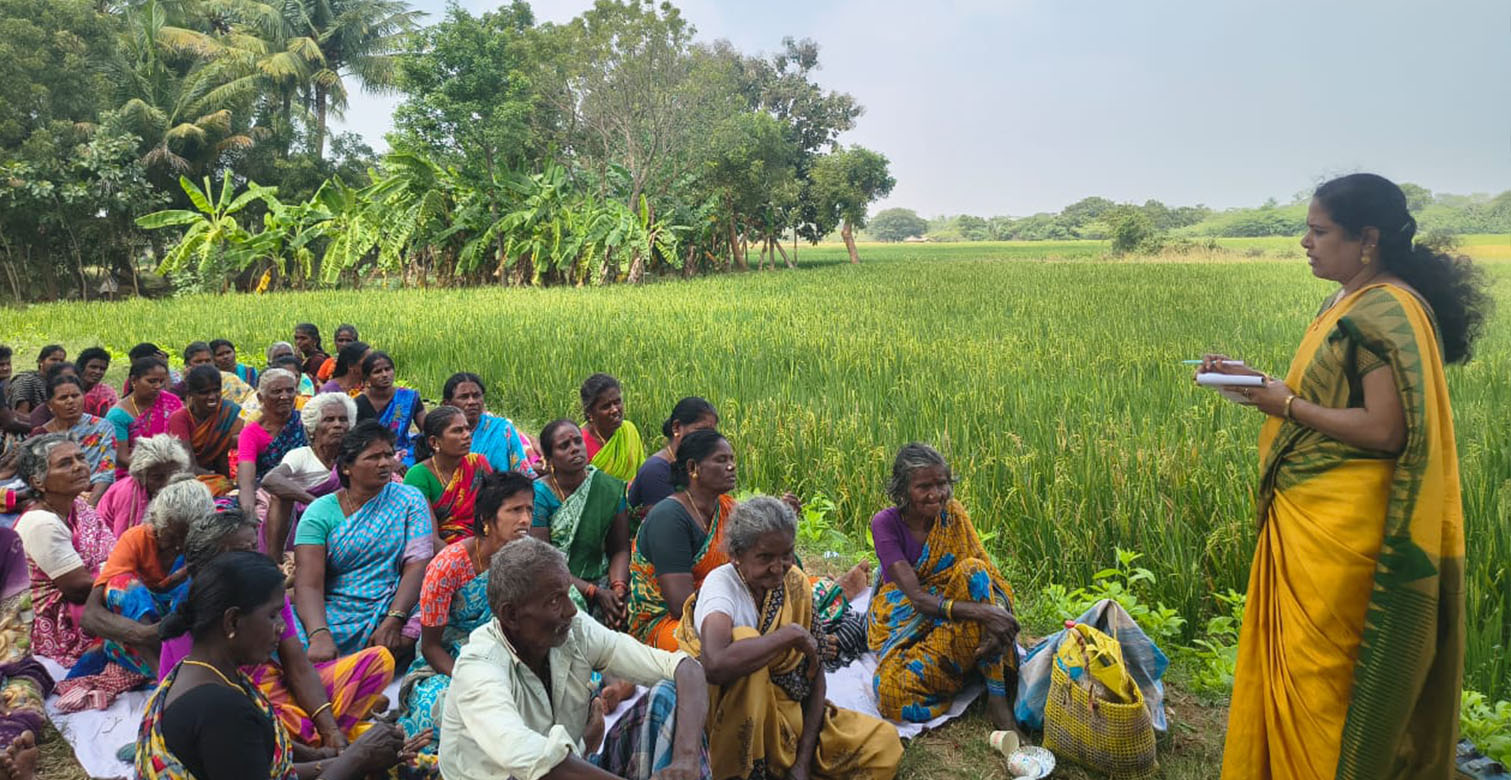
As a name, Kudumbam (family) represents the smallest foundational social unit where diverse talents and individual limitations are recognized equally to cultivate a dignified destiny. Grounded in this philosophy, we began mobilizing rural communities to safeguard local water bodies and appreciate the vital importance of drought-tolerant traditional crop strains. By identifying local "change-makers," we built community seed banks, managed local water tanks, and re-established native forests while explicitly tackling rural poverty through deeply inclusive, pro-women economic tracks.
In 1990, Kudumbam established a 30-acre dryland ecological farm-cum-training center designed to pilot soil restoration models, rainwater harvesting structures, strategic agroforestry, animal-crop integration, and organic bio-inputs. Our primary objective is to inspire neighboring smallholders to implement these systems, rebuilding regional trust in dryland farming capabilities. It was always Dr. Nammalvar's baseline vision that rainfed communities, field organizers, and research universities should directly collaborate—systematically resolving complications across native seed breeding, natural pest control, and processing methods to upscale sustainable rural techniques.
To strengthen vulnerable communities through multi-stakeholder partnerships dedicated to preserving and regenerating native flora and fauna—ensuring secure rural livelihoods and fostering environmentally benign, socially just bio-villages.
To mobilize deep community participation in cultivating high biodiversity grids at farm and village levels, ensuring regional sovereign access to seeds, land, clean water, and equitable production resources that enrich food security networks.
Governance & Strategy
Central Oversight
Operations Hub
Ecological Field Hub
Field Base Sector
Field Base Sector
Regional Activity Hub